

Kyokutoh Robotic Spot Welding Tip Dressers
G.E. Schmidt distributes Kyokutoh automatic electrode tip dressers for robotic spot welding applications. Kyokutoh tip dressers use high-speed, high-torque motors to recondition copper weld caps, dressing both the upper and lower electrodes simultaneously in a single cycle. All Kyokutoh dressers adhere to CCC and CE international safety standards.
G.E. Schmidt works with customers to select the right dresser and cutter configuration for their application, and can help establish tip dressing intervals and company standards for electrode maintenance programs.
Kyokutoh Tip Dresser Models
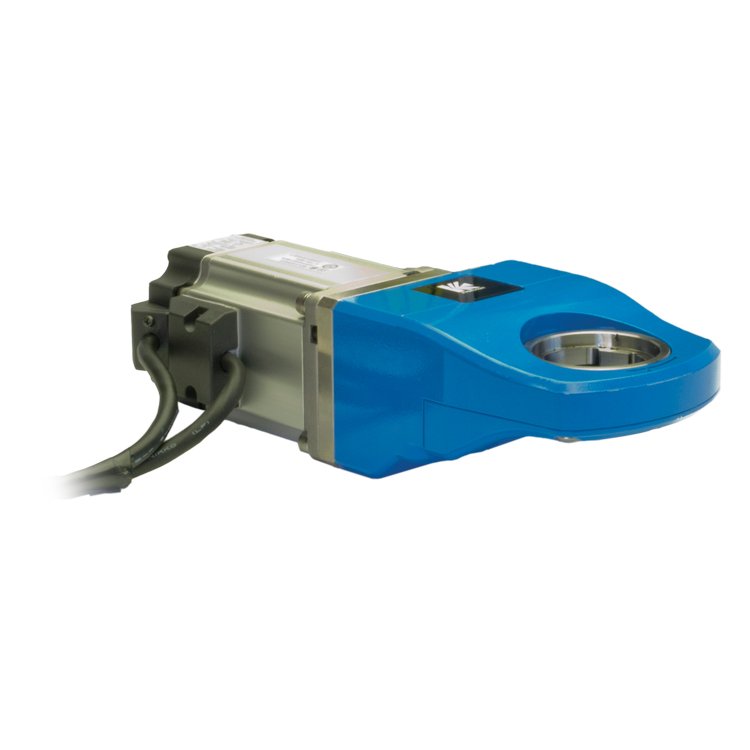
CDK-SVR Servo-Driven Tip Dresser The servo-driven CDK-SVR provides maximum control over rotation speed and torque, making it well-suited for applications where precise dressing parameters matter.
CDF Pneumatic Tip Dresser The next generation and automotive standard, with a 60% faster spin for a cleaner, mirror-like finish on the caps.
CDK-SG Short-Clearance Tip Dresser A reduced nose profile in front of the cutter and holder allows the CDK-SG to dress in tight spaces where standard units can’t reach.
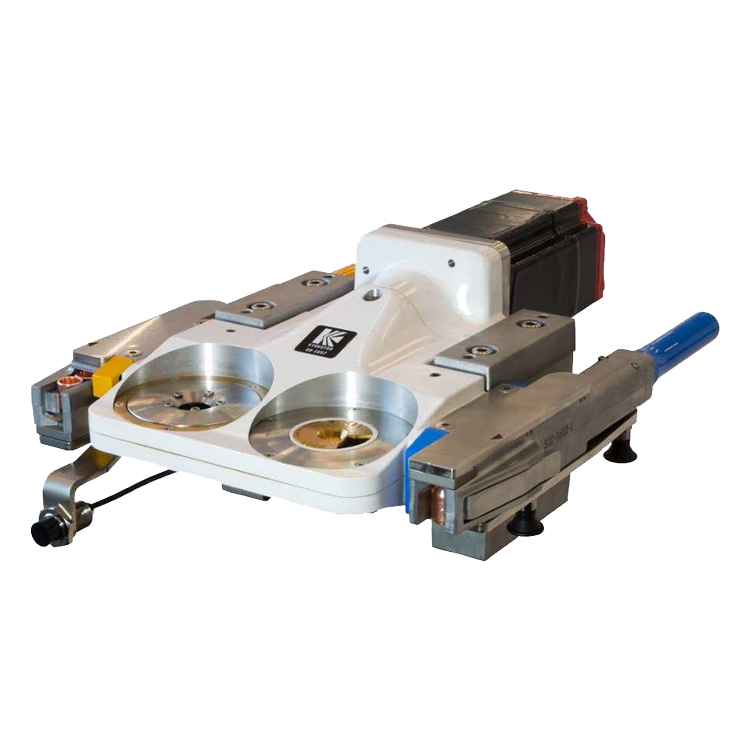
DH-SVR2 Dual-Head Tip Dresser/Changer Combination The servo-driven DH-SVR2 combines tip dressing and tip changing in a single unit, saving floor space in cells where both functions are required.
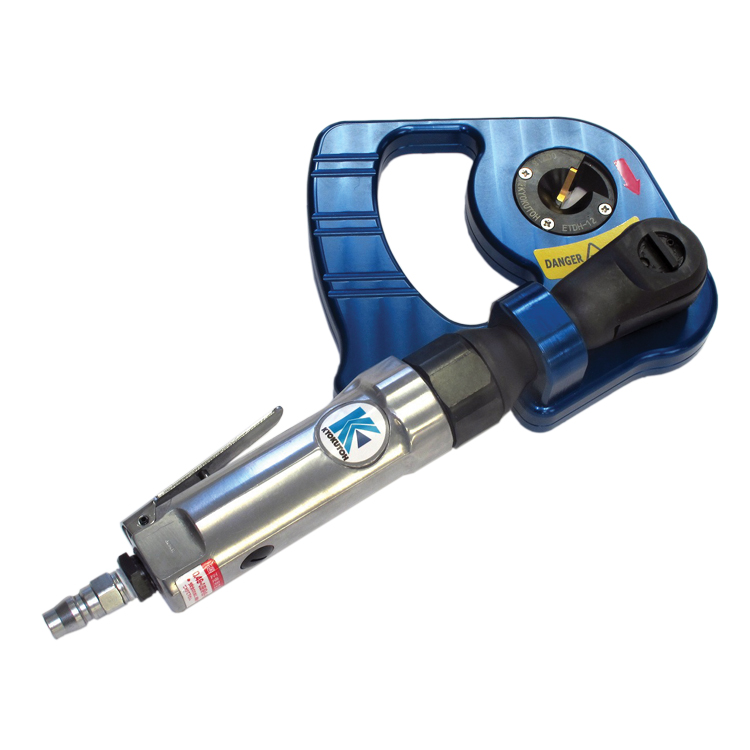
For handheld dressing on pedestal welders and lower-volume applications, see the Kyokutoh Stingray manual tip dresser.

Tip Dresser Accessories
Cutters and Holders Titanium nitride (TiN) coated cutter blades with a rated life of approximately 10,000 seconds of dressing time. Kyokutoh holders feature large cut-outs to reduce clogging during high-volume dressing cycles.
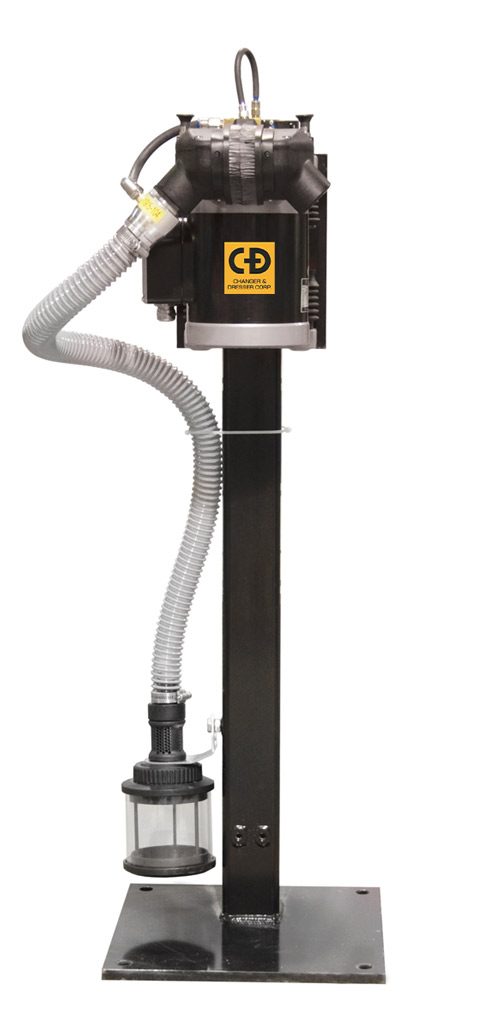
Chip Vacuum Collector Keeps the cutter blade clear and the work area clean. A quick two-pin hood release provides fast access to the cutter and holder. Eliminates the need for a separate stand-alone air blow unit; side-approach versions are also available.
Rotation Sensor A proximity sensor confirms the cutter is spinning during each dress cycle, alerting the system to dressing failures before undressed or damaged caps can affect production quality.
Stationary Dresser Stand Available in several heights and orientations for robotic spot welding cells. When ordered as a package, the stand, dresser, and accessories arrive assembled and ready to install.
ProLine Tip Dress Swing Arm G.E. Schmidt’s ProLine Swing Arm positions the tip dresser at a consistent, repeatable location relative to the weld gun. Available in side- and floor-mount configurations with coarse and fine head adjustments. Designed for pedestal welding applications.
Why Tip Dressing Matters in High-Volume Production
Electrode caps degrade with every weld cycle. Heat, pressure, and the alloying of copper with the base metal cause the cap face to mushroom, oxidize, and accumulate contaminants over time. As the contact area grows larger and less uniform, current density at the weld interface drops — which leads to undersized nuggets, stuck welds, and inconsistent weld quality across the production run. Regular dressing restores the cap to a consistent geometry, surface condition, and contact diameter — which is what keeps weld quality repeatable across thousands of cycles.
Dressing both electrodes simultaneously in a single cycle matters beyond efficiency. Mismatched face diameters between the upper and lower cap produce asymmetric heat distribution at the interface, which affects nugget shape and consistency. Simultaneous dressing keeps both electrodes on the same geometry and the same maintenance cycle.
Dressing Frequency and Cycle Quality
Dressing frequency and dressing quality are both critical. Letting too many welds accumulate between dress cycles allows harder deposits to build up on the cap face, which accelerates cutter blade wear and reduces the effectiveness of each dressing pass. A dressing cycle that fails — due to cutter wear, chatter, or debris on the dressed face — can be as damaging to weld quality as skipping the dress cycle entirely.
For operations that need to verify each dress cycle before the next weld sequence begins, Kyokutoh tip dressers can be paired with a Kyokutoh Tip Monitor, which photographs and measures the cap face after dressing to confirm the electrode is within spec before production resumes.
For more on establishing a tip dressing program, see the Tip Dressing overview.