NVS+ Advanced Monitor
Weld Nut Presence, Orientation, and Set-Down Monitoring for Projection Welding
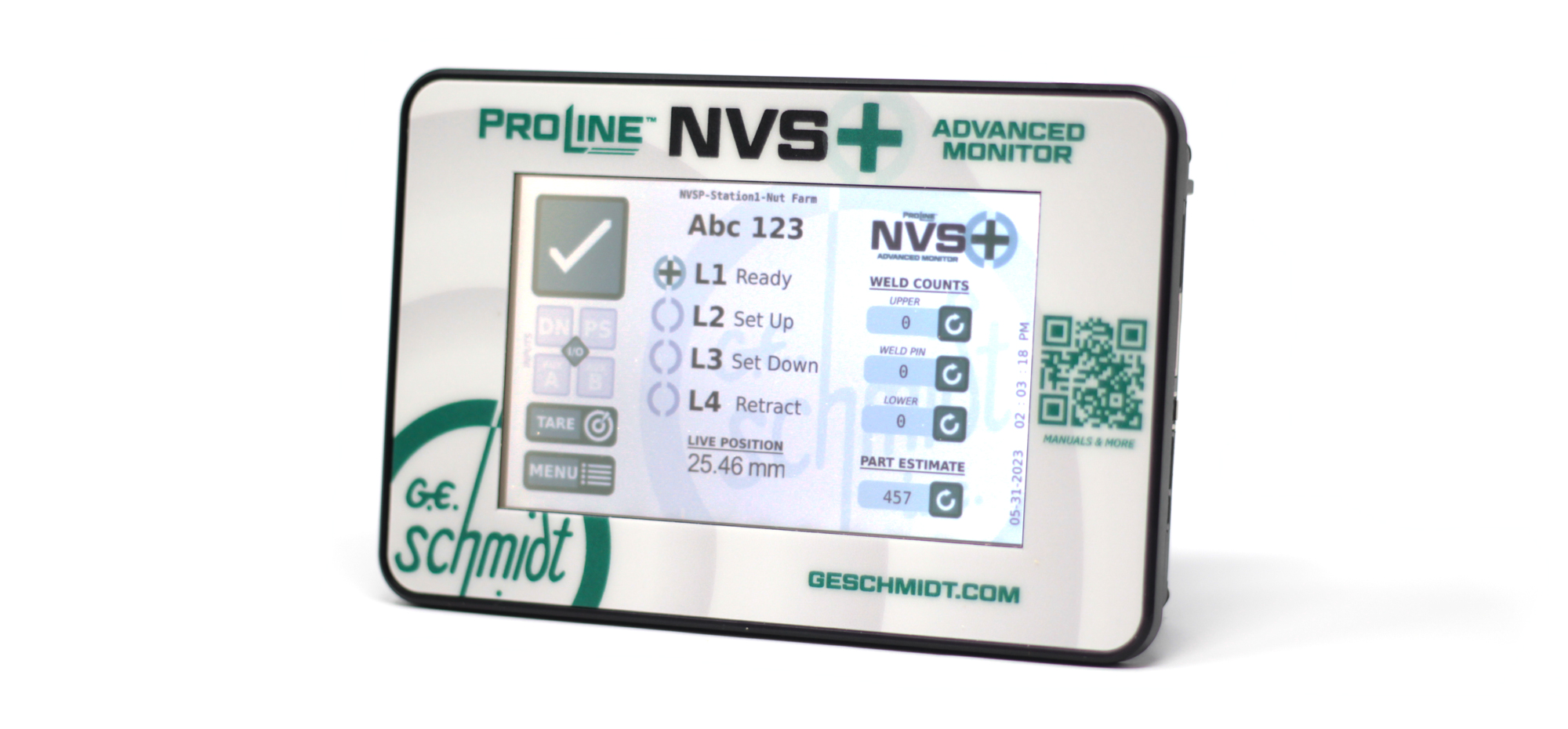
The ProLine™ NVS+ Advanced Monitor is G.E. Schmidt’s inline process monitoring system for projection welding applications. It detects missing nuts, upside-down nuts, incorrect or inconsistent fasteners, weld collapse anomalies, pin and electrode wear, and other fault conditions in real time — before bad parts move downstream.
The core value is straightforward: the cost difference between catching a defective part at the welder and finding it three operations later — or at the customer — is enormous. In high-volume automotive and appliance production, a single missed defect can trigger rework on partially assembled components, halt a line waiting on sorting, or generate warranty claims that far exceed the cost of any monitoring system. Real-time detection at the point of welding eliminates that exposure entirely.
What the NVS+ Detects
The NVS+ uses an LVDT (linear variable differential transformer) to measure weld pin travel and position throughout the weld cycle, tracking five distinct phases:
- L1 — Pin Up: Weld pin is extended and ready for nut feeding
- L2 — Set Up: The head lowers onto the nut and stamping
- L3 — Set Down: The nut collapses into the stamping during welding
- L4 — Retract: The weld pin retracts as the stamping moves
By comparing measured pin travel against programmed tolerances at each phase, the NVS+ identifies fault conditions that visual inspection and simple go/no-go sensors cannot reliably catch:
- Missing nuts or bolts
- Upside-down nuts or bolts
- Incorrect, inconsistent, or damaged fasteners
- Pin and electrode wear
- Inconsistent weld collapse
- Pin movement failures
- Stacked or double fasteners (with optional Double-Nut Sensor Kit)
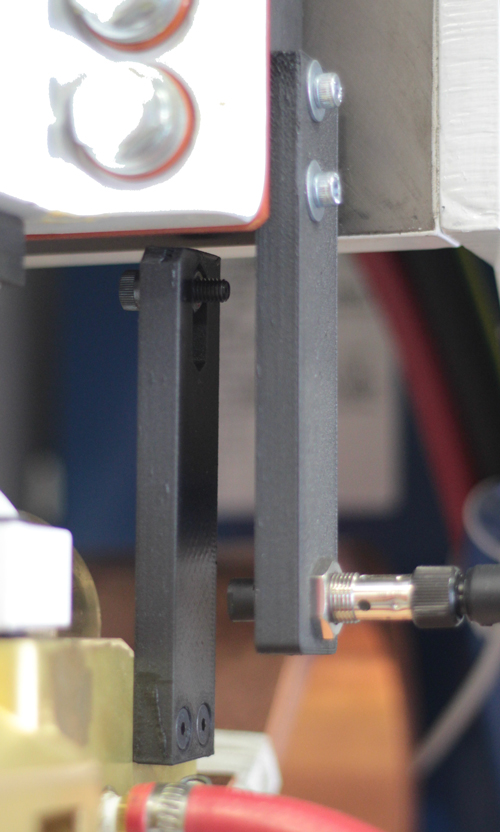
Optional Double-Nut Sensor (see Accessories below)
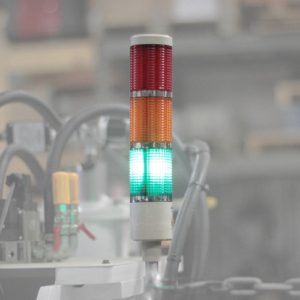
Optional Light Tower (see Accessories below)
Why Inline Monitoring Matters
In projection welding, the weld cycle takes a fraction of a second. A missing or inverted nut isn’t always obvious to an operator in production rhythm, and by the time it’s discovered downstream the cost of the escape compounds quickly. The NVS+ stops the cycle before the bad part moves on and logs the event for traceability — turning a potential downstream crisis into a welder-floor correction.
Weld collapse monitoring adds a second layer of quality assurance beyond simple fastener presence. A nut can be present and right-side-up and still produce a marginal weld if the projection doesn’t collapse correctly. The NVS+ monitors the collapse profile on every weld cycle — not just whether a nut was fed.
Beyond real-time detection, the NVS+ data logging capability supports continuous improvement work. Detailed process logs let you identify trends in equipment wear, weld schedule drift, or feeder performance — and address them proactively rather than after a quality escape.
More Than a Sensor
Most competing weld nut detection products are only that — sensors. (That doesn’t seem very “Smart.”) They tell you whether a nut is present or absent and stop there. The NVS+ adds intelligence to that detection: weld profile storage, data logging, error tracking, production counting, and communication outputs are all built in and operational out of the box, with no custom coding or external data infrastructure required. You get a complete monitoring and data system, not a signal that something needs to be wired into something else before it’s useful.
SmartForce Push Out Test System
The NVS+ tells you the projection collapsed correctly. The ProLine SmartForce Push-Out Test System tells you how strong the joint actually is — with quantitative force data, part profiles, and CSV export for traceability. The two systems are designed to work together as a complete projection welding quality program.
NVS+ Features
The NVS+ builds on the NVS G-Series platform with expanded capability for data-driven production environments. It works with a host of secondary sensors alongside the standard LVDT for additional layers of protection, and supports communication protocols for integration with MES and quality management systems.
Standard on NVS+:
- Weld cycle tracking
- Weld profile storage
- Quick Teach function
- Password protection
- Weld data logging
- Error/alarm logging
- Production counter
- Consumables tracking
- Instant part RFQ
- Remote tare
- Binary I/O
- Simple data output
- NEMA steel enclosure
- Ethernet communications
- Double-nut sensor compatibility (optional)
- Light Tower integration (optional)
- Power Hopper integration (optional)
- XL screen (optional)
- Platen-style lower compatibility (optional)
Optional Accessories
Double-Nut Sensor Kit
Stacked fasteners — two nuts fed to the pin without the first being welded — cannot be detected by pin measurement alone. The Double-Nut Sensor Kit adds a proximity sensor and bracket to the upper moving head of the welder, connecting to the NVS+ for a second detection layer. Stacked nuts are one of the more common operator errors in nut welding; this accessory closes the detection gap.
Light Tower
Mounts to the NVS+ enclosure, the welder frame, or weld cell guarding. Makes production status and fault conditions clearly visible to weld supervisors on the floor. Operators can also trigger a supervisor call signal without interrupting production.
ProLine Power Hopper
Uses an electronic lock to control access to SEKI Feeder Selector Units during fastener refills. Access is controlled via password on the NVS+ interface, increasing accountability and reducing the risk of wrong-fastener loading. Can also be integrated directly with existing PLC systems.
Compatible Platforms
The NVS+ can be integrated with most projection welding platforms. For customers purchasing a ProLine pedestal welder, G.E. Schmidt can build the NVS+ in and integrate it before delivery — including the ProLine Adaptive Series Welder, which includes a dedicated NVS mount at eye level for convenient inline monitoring.
For platen-mount applications, the NVS+ is also compatible with the Doceram® ModulMaster — a modular lower holder system that integrates cooling, air inputs, and a linear sensor to measure pin travel and position, alongside quick-change electrodes and ceramic weld pins. The NVS+ measures and records weld data from the ModulMaster system. Changing the pin and cap requires only standard tools and takes approximately one minute.
Why is it important to monitor the nut welding process instead of verifying the result?
The NVS+ monitors every part in real time — but fastener set-down monitoring and weld strength aren’t the same measurement. The NVS+ confirms that the projection collapsed correctly; it doesn’t directly measure the mechanical strength of the joint. For that, destructive testing is required.
That’s where the ProLine SmartForce Push-Out Test System fits into a complete projection welding quality program. Where the NVS+ watches every cycle for process deviations, the SmartForce physically applies force to the weld until the joint breaks — giving you a direct, quantitative measurement of actual weld strength rather than an inference from pin travel.
The SmartForce supports part profiles with defined strength targets and safety buffers, so results are evaluated consistently rather than left to operator judgment. Onboard data logging with CSV export provides documented, traceable test results, and password protection keeps testing standards consistent across operators and shifts.
The right approach treats these as complementary tools. The NVS+ provides continuous, real-time monitoring on every part. The SmartForce validates the welding procedure, qualifies new part numbers and materials, and provides the documented proof of weld strength that automotive, appliance, and industrial customers increasingly require. One monitors the process; the other verifies the result.
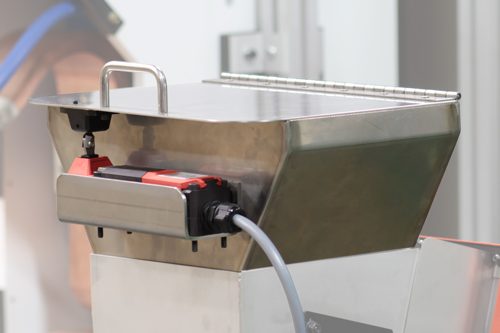
Optional Light Tower (see Accessories below)