

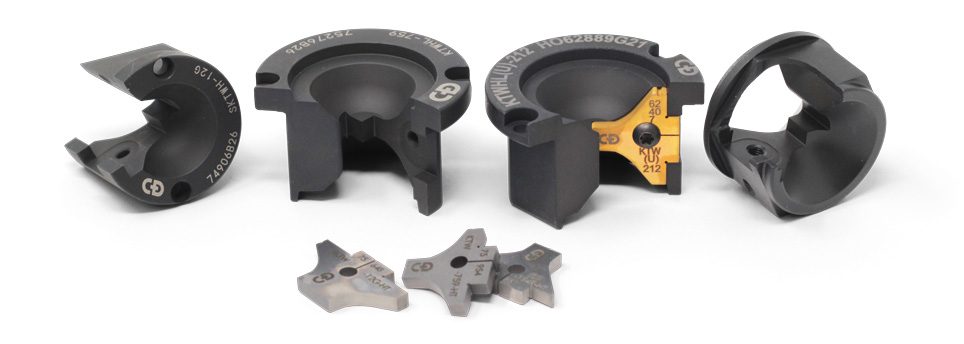
Tip Dressers for Resistance Welding
G.E. Schmidt supplies tip dressing equipment for resistance welding applications — from robotic tip dressers and automatic tip changers for high-volume production to manual dressers and swing arm systems for lower-volume and offline use.
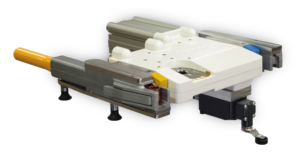
K-IKK Spot Welding Tip Changer
When electrode life is exhausted and dressing is no longer sufficient, Kyokutoh automatic tip changers replace weld caps in 20–30 seconds — versus 5–10 minutes for a manual change. Designed for robotic weld cells running high weld counts per shift.
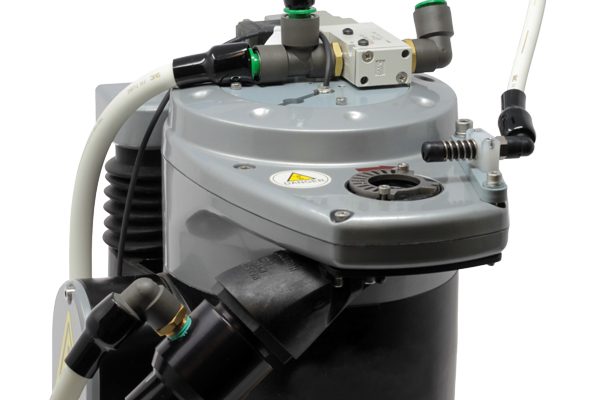
Kyokutoh Tip Dressers
Kyokutoh tip dress units maintain electrode face geometry automatically between weld cycles, without operator intervention. Dual-sided cutters restore both electrodes simultaneously and are available in a range of cutter profiles to match specific tip geometries.
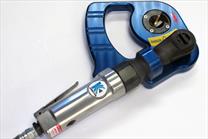
Manual Tip Dresser
Handheld tip dress units for lower-volume applications, offline dressing, and maintenance use. A practical option where robotic integration isn’t required.
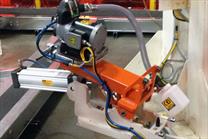
ProLine™ Swing Arm
G.E. Schmidt’s ProLine Swing Arm positions a tip dresser at a consistent, repeatable location relative to the weld gun — reducing placement variance on the production floor while retaining the flexibility of adjustable tooling. Designed for pedestal welding units.
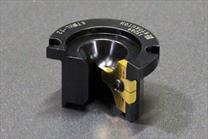
Cutters & Holders
Tip dressing cutters and holders for Kyokutoh tip dressers and other major manufacturers. Available in profiles to suit common electrode geometries.
What Is Tip Dressing and Why Does It Matter?
Tip dressing is the process of reshaping and reconditioning electrode tips back to their original geometry after they’ve been deformed through repeated welding cycles. During normal operation, the copper alloy electrode face flattens, mushrooms, and accumulates oxides and alloying material from the workpiece — all of which increase the contact area, reduce current density, and degrade weld quality over time.
The mechanism is straightforward: as the electrode face grows larger, the same weld current is spread over a larger area, producing less heat at the weld interface. The result is undersized nuggets, reduced weld strength, and increasing variability from weld to weld. Regular tip dressing restores the original face geometry, returning current density to spec and resetting the process to its intended parameters.
Manual vs. Robotic Tip Dressing
Manual tip dressers are appropriate for lower-volume applications, pedestal welders, and offline or maintenance dressing. For production robotic weld cells, manual dressing introduces variability — dressing frequency depends on operator discipline, and dressing quality depends on technique.
Robotic tip dressers integrate directly into the weld cell and dress automatically between cycles on a defined interval, typically controlled by weld count. This maintains electrode geometry consistently across thousands of welds per shift without operator intervention. In high-volume production, robotic tip dressers paired with automatic tip changers — such as Kyokutoh systems — are the standard approach to electrode life management.
Dressing Frequency and Electrode Life
Dressing frequency matters in both directions. Dressing too infrequently allows the tip to degrade past the point where dressing can fully restore geometry, accelerating wear and weld quality loss. Dressing too aggressively — removing more material than necessary per cycle — shortens electrode life unnecessarily by consuming usable copper faster than wear alone would.
Tip dressing is also not a permanent substitute for tip replacement. Over time, the electrode shank work-hardens and the tip geometry can no longer be reliably restored by dressing. At that point, the electrode needs to be replaced entirely. Dressing extends electrode life; it doesn’t eliminate the tip change interval.
Tip Dressing and Weld Quality Issues
Inadequate tip dressing is a documented cause of several resistance welding defects, including inconsistent weld quality, undersized welds, stuck welds, and excessive indentation. If weld quality is trending downward between tip changes with no other process changes, dressing interval and cutter condition are the first things to check.