
Ceramic Weld Pins for Nut Welding
If you’re replacing weld pins every few days, dealing with spatter in nut threads, or chasing inconsistent fastener orientation, the pin is the problem — and a solid ceramic pin is almost certainly the solution.
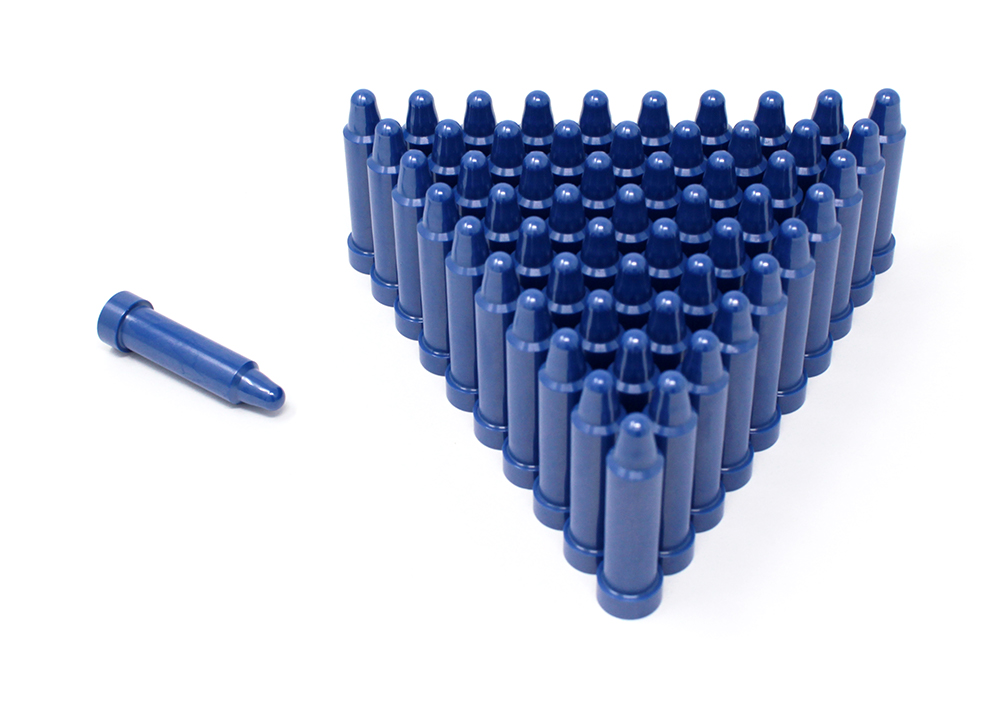
Ceramic weld pins eliminate the failure mode that coated steel pins are subject to: there’s no coating to wear through. The entire pin is ceramic. It maintains its geometry and surface condition across hundreds of thousands or millions of weld cycles, resists spatter accumulation without bonding, and when it does get dirty, it wipes clean. Many operations that switch to ceramic pins move from replacing pins daily or weekly to replacing them annually — with better weld quality and less unplanned downtime throughout.
The Real Cost of Coated Weld Pins
A coated pin costs less on the purchase order. But the math changes quickly once you account for how often it needs to be replaced, how much downtime each change introduces, and what happens to weld quality as the coating degrades.
Once the coating wears through — and it will — spatter builds up on the pin face, fastener feeding becomes inconsistent, and nut orientation gets unpredictable. In a nut welding application, that means contamination in the thread bore and fasteners that don’t sit flush on the part. The weld may look fine. The assembly downstream won’t be.
Solid ceramic pins don’t degrade that way. The surface condition at cycle one is essentially the surface condition at cycle 100,000. That consistency translates directly into fewer defects, less operator intervention, and a lower true cost per weld over the life of the pin.
No Spatter in the Threads
In resistance nut welding, this is the argument that closes the conversation. Weld spatter doesn’t bond to ceramic the way it bonds to metal. A ceramic pin keeps the nut thread bore clean through the weld cycle — the fastener comes off the welder ready for assembly, with no cleanup, no re-tapping, and no risk of a contaminated thread making it into a finished part.
Material Options
G.E. Schmidt supplies Doceram solid ceramic weld pins in two primary materials. The right choice depends on the thermal and mechanical demands of your application — we can help you select if you’re not sure.
Cerazur — Y-PSZ
Color: Royal Blue
Cerazur is the standard choice for most nut welding applications. It has the highest bending strength and fracture toughness in the line — properties that matter in applications with high mechanical loads, abrasive wear, or any risk of impact. Its Weibull modulus of 25 is the highest in the line, meaning part-to-part consistency is excellent and failure is predictable rather than sudden.
Key properties:
- Bending strength: 1,300 MPa
- Fracture toughness (K_Ic): 12 MPa·m½ — approximately 70% higher crack propagation resistance than Volcera 141
- Weibull modulus: 25 — highest reliability in the line
- Electrical resistance: >10¹⁵ Ω·cm
- Maximum operating temperature: 1,000°C
- Thermal shock resistance: 280 ΔT°C
The royal blue color is a practical shop-floor identifier — Cerazur pins are immediately distinguishable from coated steel and from Volcera 141.
Volcera 141 — High-Purity Silicon Nitride
Color: Grey or Black
Volcera 141 is the material of choice when thermal conditions push past what Cerazur handles well — sustained high temperatures, severe thermal cycling, or pin positions close to the weld zone. It is high-purity silicon nitride with no adjuncts or polymer additives, which matters: many nominally “silicon nitride” products contain fillers or binders that compromise performance under the conditions where silicon nitride’s advantages are most needed.
Key properties:
- Thermal shock resistance: 830 ΔT°C — three times higher than Cerazur
- Maximum operating temperature: 1,200°C — 200°C above Cerazur
- Thermal expansion: 3.4 × 10⁻⁶ K⁻¹ — lowest in the line; best dimensional stability under thermal load
- Hardness: 1,650 HV 0.5 — highest in the line
- E-modulus: 320 GPa — highest stiffness in the line
- Electrical resistance: >10¹¹ Ω·cm
If your application runs at sustained high temperature or sees rapid thermal cycling that would stress a less thermally stable material, Volcera 141 is the right choice.
Standard Configurations and Custom Pins
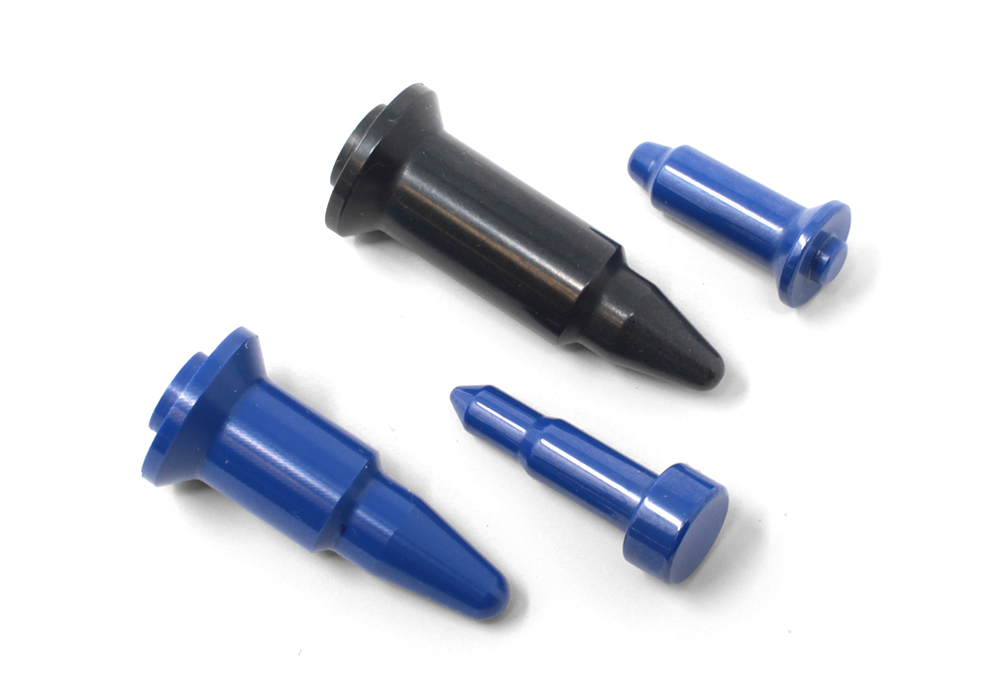
Doceram ceramic weld pins are available in three standard nose geometries for automatic feeders — including SEKI nut feeders — and hand-fed applications, with standard diameters matched to 0.1 mm stamping hole diameter increments. Custom geometries are available for non-standard applications; contact G.E. Schmidt with your requirements.
System Integration
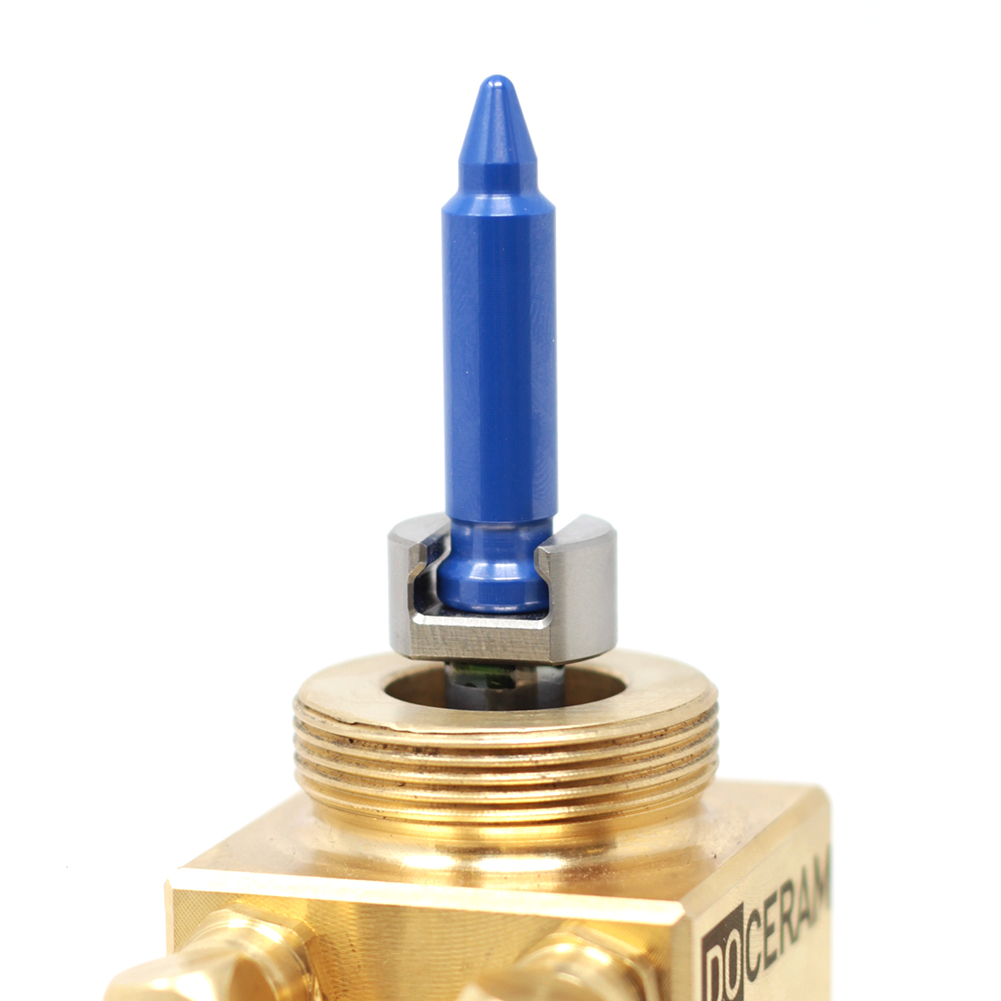
Doceram ceramic weld pins are designed for use with the Doceram ModulMaster modular lower holder system, which integrates cooling, air inputs, and a linear sensor for pin travel monitoring. The ModulMaster is compatible with the ProLine NVS+ Advanced Monitor for inline weld quality data. Pin and cap changes require only standard tools and take approximately one minute.
Ceramic weld pins are also available as a direct replacement for coated steel pins on existing ProLine pedestal welders and most other projection welding platforms — no system change required to start seeing the benefits.
Try Before You Commit
If you haven’t run ceramic pins before, or if you’ve had a poor experience with lower-quality ceramics in the past, G.E. Schmidt offers application trials. Not all ceramic pins are manufactured to the same standard — dimensional tolerances, material purity, and manufacturing quality vary significantly across suppliers. A pin that underperforms in a trial is usually a quality issue, not a ceramic issue. We’ll help you identify the right material and geometry for your application before you commit to a production order.
Contact G.E. Schmidt or submit a trial request to get started.
Book An Online Appointment With GES
Need to talk? Schedule an appointment at a convenient time for you using our booking tool.