

Manual Tip Dresser for Spot Welding
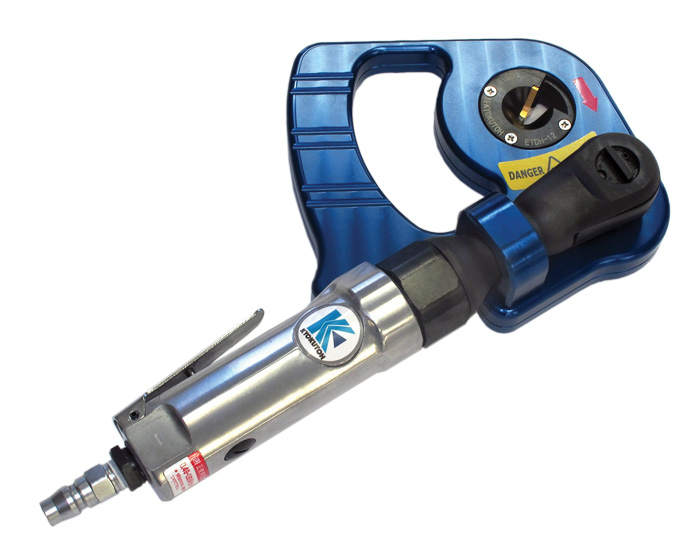
G.E. Schmidt distributes the Kyokutoh Stingray manual electrode tip dresser for spot welding applications where handheld dressing is the right tool for the job.
Kyokutoh Stingray Manual Tip Dresser
The Stingray is a pneumatic manual tip dresser that reconditions upper and lower weld caps simultaneously in a single dressing cycle. The dual-sided cutter restores both electrode faces to the correct geometry at once — which matters for weld quality, since mismatched tip face diameters between the upper and lower electrode produce asymmetric heat distribution and inconsistent nugget formation.
The dresser features a large horizontal grip designed to fit hands wearing protective gloves, giving the operator stability and control during dressing. Operation is straightforward: position the dresser over both caps and actuate — the cutter does the work.
The Stingray uses the same cutters and holders as the Kyokutoh CDK-R robotic tip dresser, which simplifies spare parts stocking if both are in use in the same facility.
When a Manual Tip Dresser Is the Right Choice
Manual tip dressers are the appropriate solution for welding setups where robotic automation isn’t part of the cell — pedestal welders, rocker-arm machines, and other configurations where a human operator runs the weld cycle. They’re also practical for lower-volume operations where the cost and complexity of a robotic dresser isn’t justified, and for maintenance scenarios where a technician needs to dress tips on a machine that’s been pulled from service.
For robotic weld cells where the gun can be programmed to visit a dresser at a defined weld count interval, a robotic tip dresser is the better choice — that’s where automated dressing pays off in consistency and throughput. The manual dresser isn’t a compromise in those applications; it’s simply the wrong tool.
What Tip Dressing Corrects
Regular tip dressing addresses a range of weld quality issues caused by electrode face degradation, including undersized welds, stuck welds, non-round welds, excessive indentation, and poor Class-A appearance. For more on how electrode wear affects weld quality and how to establish a dressing program, see the Tip Dressing overview.