
SEKI Feeder Maintenance & Troubleshooting

Please use the resources on this page as a reference to common maintenance practices and repairs for your SEKI Air Rod  Feeders and Bolt Feeders. Contact G.E. Schmidt, including your SEKI Feeder serial number, at contactus (at) geschmidt.com.

These videos and pages show generalized service advice; your specific equipment may vary from the products and configurations in the videos. Wear appropriate protective equipment while servicing any machines, and follow all safety advice in the videos and documents as well as the protocols of your workplace.

NOTE: G.E. Schmidt only provides service for SEKI Feeder units that it sells; if you need further information or service about a unit purchased elsewhere, please refer questions to your distributor. All of these materials are the property of G.E. Schmidt and may not be reused or distributed without the express consent of G.E. Schmidt.
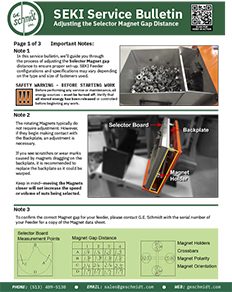
How to Adjust the Selector Magnet Gap on the SEKI Feeder

In this video bulletin, you’ll learn how to adjust the Selector Magnet gap distance on the SEKI Feeder for optimal performance. This step-by-step guide walks you through identifying when an adjustment is needed and provides a clear method for setting the correct gap. The video also emphasizes which components are factory-set and must not be altered, helping you avoid costly errors. Whether you’re troubleshooting magnet drag or fine-tuning your feeder for a specific fastener type, this video offers detailed instructions to ensure precise and efficient magnet operation.

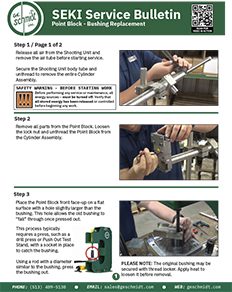
How to Replace the Point Block Bushing on the SEKI Feeder

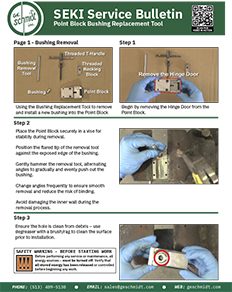
This step-by-step video tutorial walks you through the complete process of replacing the Point Block bushing on a SEKI Feeder. It also covers prepping the Point Block, pressing in the new bushing evenly, and reaming the interior if needed to ensure smooth rod movement. This video is essential for technicians performing routine maintenance or replacing worn bushings on SEKI Shooting Units, and it emphasizes safe handling, precision alignment, and clean installation.

Point Block Bushing Tool + Installation

This instructional video shows you how to safely and efficiently remove a bushing from the SEKI Point Block using the NEW bushing removal tool and technique. The video demonstrates the correct use of a flared-tip removal tool and explains how to apply gradual, angled pressure to avoid damage or seizure during extraction. Whether you’re performing routine maintenance or replacing a worn part, this guide will help ensure a clean and damage-free bushing removal process.

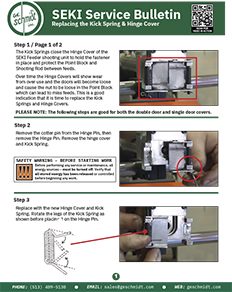
How to Replace the Kick Spring and Hinge Cover on the SEKI Feeder

This video guide demonstrates how to replace the Kick Spring and Hinge Cover on SEKI Feeder shooting units—an essential maintenance task to ensure fasteners are properly secured and feeding accurately. The tutorial walks you through the full replacement process for both single and double door configurations. This video ensures your SEKI Feeder continues to operate with consistent accuracy and reliability.

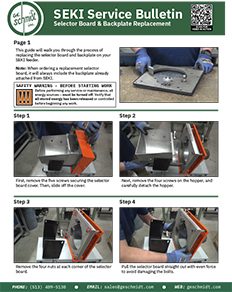
How to Replace the Selector Board and Backplate on a SEKI Feeder

This video tutorial provides a complete walkthrough for replacing the selector board and backplate on a SEKI Feeder system. Viewers will learn how to safely disassemble the feeder, including removing the selector board cover, hopper, and damaged selector board. Since SEKI replacement selector boards are shipped with the backplate pre-attached, this guide simplifies the process and helps maintain feeder accuracy and performance. Always confirm specific magnet gap settings with SEKI or G.E. Schmidt based on your feeder configuration.

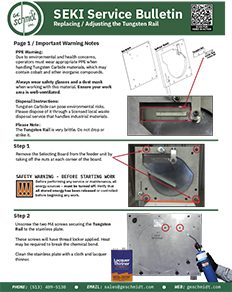
SEKI Slider 3 Feeder – Replacing & Adjusting the Tungsten Rail

In this step-by-step video, you’ll learn how to properly replace and align the Tungsten Rail on the SEKI Slider 3 Feeder. The tutorial walks you through the complete process. Whether you’re performing routine maintenance or a full part replacement, this video provides clear, practical instructions to ensure your SEKI Feeder runs smoothly and efficiently. Proper handling of the brittle Tungsten Rail is also emphasized throughout the process.

SEKI Slider 3 Adjust-Rplc Tungsten Rail

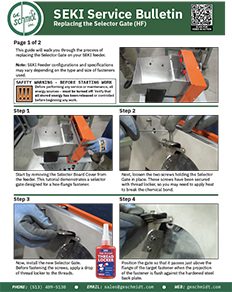
How to Replace the Selector Gate on a SEKI Feeder

This video tutorial provides step-by-step instructions for replacing the selector gate on a SEKI Feeder. It covers the full process, from removing the selector board cover and correctly positioning the new selector gate using hex nut reference points for precise alignment. A demonstration shows how to test fastener orientation and confirming only correctly aligned nuts pass through the gate. Once verified, the selector board cover can be reinstalled. Following this guide ensures accurate fastener selection and consistent feeder performance.

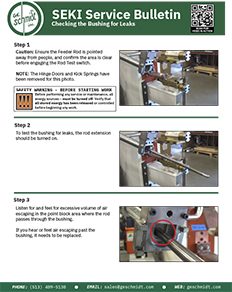
How to Check the Point Block Bushing for Air Leaks on a SEKI Feeder

This video tutorial explains how to identify air leaks in the point block bushing of a SEKI Feeder—an essential part of maintaining reliable shooting unit performance. If excess air is detected, the bushing is likely worn and should be replaced. Performing this simple check can help prevent misfeeds, improve efficiency, and extend the life of your SEKI Feeder system.

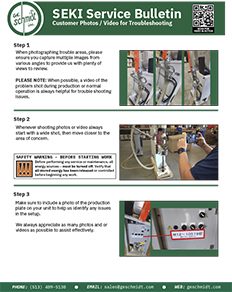
How to Capture Photos and Video for SEKI Feeder Troubleshooting

This video offers guidance on how to take effective photos and videos to assist with SEKI Feeder troubleshooting and technical support. Submitting clear, detailed visual documentation greatly improves response times and helps the G.E. Schmidt team deliver faster, more accurate support.

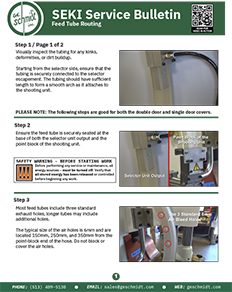
How to Properly Route the Feed Tube on a SEKI Feeder

This instructional video covers best practices for routing the feed tube on a SEKI Feeder to ensure smooth, reliable fastener delivery. Viewers will learn how to inspect the feed tube for kinks, deformities, or contamination, and verify secure connections at both the selector escapement and the point block of the shooting unit. Whether you’re replacing or rerouting feed tubing, this guide will help maintain consistent performance and reduce downtime by avoiding common routing errors.

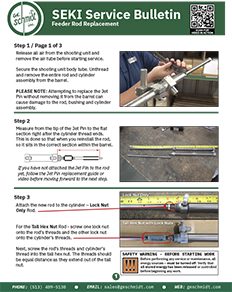
How to Replace the Rod in a SEKI Feeder Shooting Unit

This in-depth video tutorial guides you through the complete process of replacing the rod in a SEKI Feeder shooting unit. Starting with safely removing air pressure and disassembling the rod and cylinder assembly, the video shows how to take accurate jet pin measurements to ensure proper fitment during reinstallation. This guide is essential for technicians performing routine service or correcting misalignment issues in SEKI shooting units.

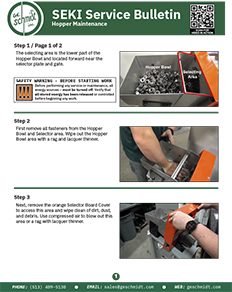
How to Perform Hopper Maintenance on a SEKI Feeder

This video tutorial provides step-by-step instructions for performing routine hopper maintenance on a SEKI Feeder. The guide also covers inspecting key components like the selecting bar, selecting plate, and magnet holders for cracks, scratches, or misalignment. Proper refill techniques are emphasized, ensuring the selecting area is not overfilled. Regular hopper maintenance helps prevent feeding issues and extends the life of your SEKI Feeder system.

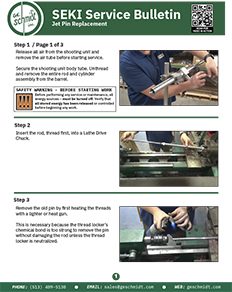
How to Replace the Jet Pin on a SEKI Feeder Shooting Unit

This detailed video tutorial walks you through the complete process of replacing the Jet Pin on a SEKI Feeder shooting unit. The video demonstrates how to unscrew the pin without damaging the rod. Once removed, the guide explains how to clean the new pin, apply fresh thread locker, and install it correctly into the rod. This video is essential for maintenance technicians working on SEKI Feeder shooting units and helps ensure long-term reliability and performance.

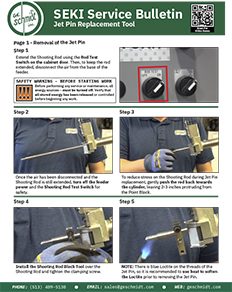
SEKI Jet Pin Replacement Tool

This detailed video tutorial walks you through the complete process of replacing the Jet Pin using the New SEKI Jet Pin Replacement Tool. The tool is used for both removal and installation.

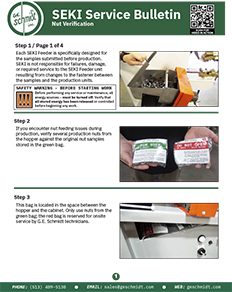
How to Perform Nut Verification on a SEKI Feeder

This video explains the importance of nut verification for maintaining consistent performance on SEKI Feeders. Each SEKI Feeder is custom-built for specific fasteners based on pre-approved samples. Any changes to nut specifications after production can result in feeding issues, damage, or unplanned service. This step-by-step guide helps operators quickly identify dimensional discrepancies and prevent costly feeder malfunctions due to incompatible fasteners.