

Missing Welds in Resistance Welding
A missing weld occurs when there is no fusion of parent metal or coatings at the intended weld location. Despite being one of the more serious weld quality issues, the root cause almost always traces back to one of two conditions: the welding equipment never contacted the workpiece at the correct location, or inadequate heat was developed at the intended location.
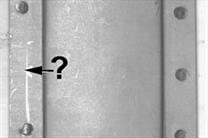
Detection
Start by referencing the applicable manufacturer’s specifications to establish required weld locations. Visual inspection can confirm whether welds are present and properly located in most cases. Where welds aren’t visible — for example, on Class-A surfaces where indentation and heat discoloration are not acceptable — nondestructive or destructive testing is required to confirm weld presence.
Why It Matters
A missing weld is a structural defect by definition. Depending on the location and the assembly’s load requirements, a single missing weld can affect joint integrity, trigger quality holds, and drive significant rework cost and downtime.
Where to Start Troubleshooting
The strong-possibility causes split cleanly into two areas, which mirrors the two root conditions described above.
Equipment didn’t reach the right location — Wrongly located welds — whether due to fixture error, robot programming, or operator placement — are the most straightforward cause to investigate. Verify weld location against the applicable drawing or specification before anything else. If the equipment is placing welds in the wrong location, that’s a setup or programming issue, not a process issue.
Inadequate heat at the weld location — Low weld current, short weld time, and poor electrical connections all reduce the heat available at the weld interface. Any one of them can prevent fusion entirely rather than simply producing an undersized nugget. Verify the weld schedule is correct for the material stack, check secondary circuit connections for condition and tightness, and confirm current delivery with a weld analyzer if the schedule looks correct on paper but welds are still missing.
Part identity — An incorrect workpiece — wrong material, wrong thickness, wrong coating — changes the thermal and electrical characteristics of the stack in ways the weld schedule isn’t designed to handle. If equipment location and electrical parameters check out, verify that the correct parts are loaded.
Full Cause List
Strong Possibilities
- Incorrect workpiece selected
- Poor electrical connections
- Weld current low
- Weld time short
- Welds wrongly located
Weak Possibilities
- Electrode wear
- Incorrect electrode dressing
- Incorrect test procedure
- Poor or varying part fit-up
- Wrong cable/shunts
- Wrong transformer
- Wrong shank
Other Possibilities
- Inadequate training
- Improper revision level documentation on plant floor