

Stuck Welds in Resistance Welding
A stuck weld is one of the more deceptive problems in resistance welding. The joint can look acceptable on the surface, but there’s no actual material fusion at the interface. Instead of a proper nugget, you get localized fusion at microscopic contact points only — the joint holds under light load and separates as soon as meaningful force is applied.
Coated materials compound the risk. Surface coatings — including naturally occurring oxides and mill scale — can prevent true nugget formation by insulating the faying surface. In those cases, the coating melts and refreezes, producing a joint that resembles a weld visually but has none of the mechanical properties of one.
Detection
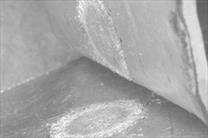
Pry testing or destructive teardown will reveal stuck welds. Push-Out Test Systems are the standard method in nut welding; tensile testers are used in spot welding applications. A proper weld leaves a clean button on teardown. A stuck weld separates with little force and leaves an irregular surface with no button formation.
Why It Matters
Stuck welds pass visual inspection and fail in service. That combination makes them particularly hazardous — they can affect joint integrity, safety, quality holds, rework cost, and throughput, and they’re easy to miss without a disciplined test regimen.
Where to Start Troubleshooting
The strong-possibility causes all point to insufficient heat at the weld interface — too little current intensity, too much force reducing contact resistance, or electrode geometry that spreads current over too large an area.
Current and heat delivery Low weld current is the most direct cause — simply not enough heat to bring the interface to welding temperature. Short weld time has the same net effect and should be checked alongside current. Verify the weld schedule against the material stack and confirm actual current delivery with a weld analyzer if the schedule looks correct on paper.
Force and contact resistance High weld force reduces contact resistance at the faying surface, which directly reduces heat generation. If force has drifted above schedule spec — or if the weld schedule was set conservatively and force crept up over time — this can suppress nugget formation without triggering any obvious process alarm. Verify electrode force against spec.
Electrode condition and geometry Worn electrodes spread current over a larger contact area than the schedule was designed for, reducing heat intensity at the interface. Wrong tips — incorrect face diameter, profile, or alloy — have the same effect. Inspect electrode face geometry and confirm the correct tip is installed for the application.
Possible Causes
Strong Possibilities
Weak Possibilities
- Defective air or hydraulic system
- Dirty material
- Excessive sealer
- Incorrect cylinder
- Incorrect electrode dressing
- Incorrect material/coating
- Incorrect workpiece selected
- Insufficient cooling
- Poor electrical connections
- Poor or varying part fit-up
- Poor weld accessibility
- Shunting of guns or parts
- Poor mechanical connection
- Weld time short
- Wrong cable/shunts
- Wrong transformer
- Wrong shank